ROBLOX GAMEPLAY & SYSTEMS

I turn rough ideas into playable systems.

AI-assisted development, directed through product judgment, persistent playtesting, and the willingness to keep working when the first answer is wrong.

SELECTED WORK

Systems that have to survive contact with players.

02
In active developmentCollaborative project · fear-system spotlight

Requiem: Shattered Souls

Making a stronger opponent feel stronger before the first hit. A five-tier fear system turns a difference in spiritual power into escalating visual, camera, and audio feedback.

0:35 controlled test stepping through all five fear levels. Development visuals; sound helps demonstrate the effect.
  1. Unease
  2. Pressure
  3. Oppressive
  4. Absolute
  5. Monstrous

Communicating the power gap

Screen effects, camera motion, breathing, and heartbeat audio intensify as the threat increases. Higher tiers add stronger sensory effects and movement penalties, making fear part of the encounter itself.

The rules behind the feeling

The server selects fear levels from the difference in maximum spiritual pressure, while distance shapes intensity. The top three tiers require an opponent's pressure mode to be active. Test controls make each level repeatable for tuning.

ROLE Fear-system implementation, presentation tuning, and test tooling within a collaborator's game · AI-assisted development and playtesting.

  • Five-tier fear
  • Proximity + power rules
  • Camera + audio feedback
  • Repeatable test tools
04
Playable development buildRetail simulation + defense

Buy This Game: Roblox Edition

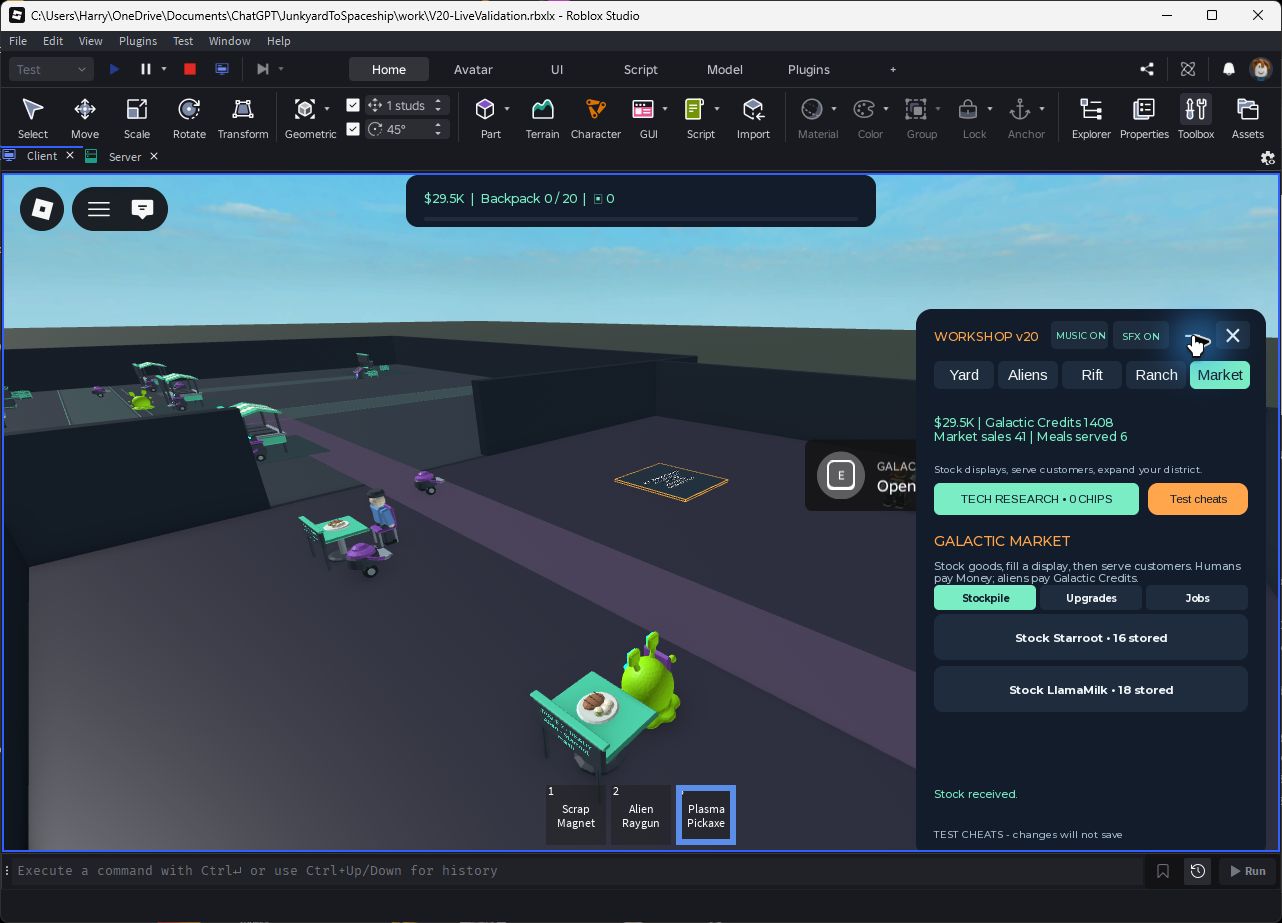
A physical retail loop where ordering, deliveries, shelf stock, shopper decisions, checkout, store layout, and nighttime defense all touch the same authoritative game state.

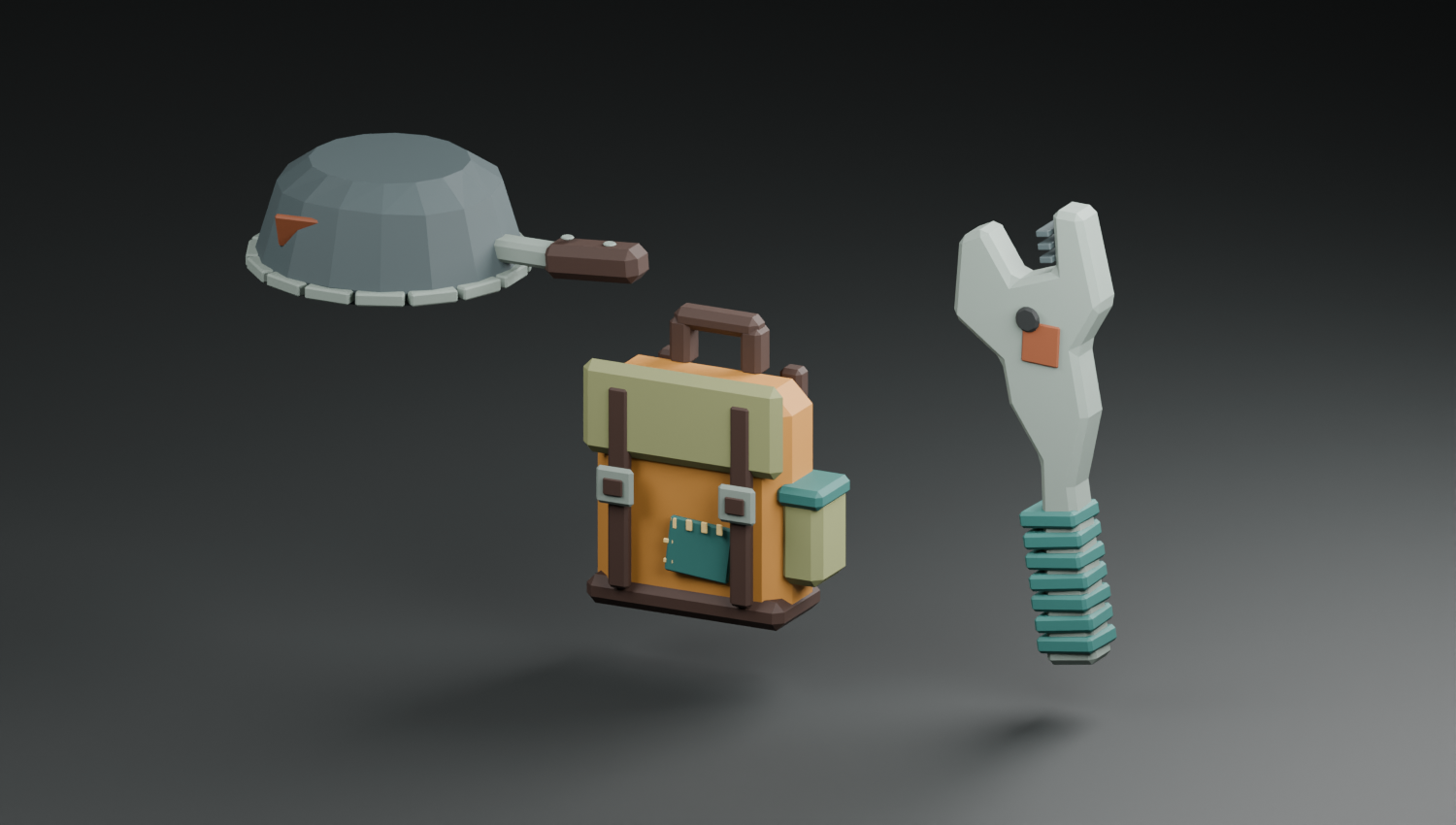
Custom scavenger helmet, loot pack, and wrench created for Buy This Game
Custom scavenger kit: authored assets integrated with synchronized movement and strike behavior.
46compiled Luau sources
8standalone rule suites
10kseeded pricing profiles

The engineering story

Player-built layouts forced shopper navigation to cope with changing routes. Pricing had to distinguish taste, budget, and willingness to pay instead of hiding every refusal behind one line.

What I drove

The gameplay loop, economy behavior, physical inventory flow, NPC feel, playtest diagnosis, and the decision to keep revising when shoppers slid, spun, or circled instead of behaving convincingly.

  • Server authority
  • NPC navigation
  • Physical inventory
  • Economy simulation
  • Combat loop
05
Collaborative developmentCollection systems + player interface

Roll a Grass

Making the collecting loop feel good from the first reveal to a growing collection: rolling, rare-result effects, batch summaries, and a GrassDex that makes discoveries easy to explore.

Rolling, a mythical-result celebration, and GrassDex, recorded in Studio.

The player-facing work

Single and batch rolls support full reveals, rarity ordering, reward summaries, and Quick Roll for skipping the presentation. Instant-roll consumables generate batches. GrassDex shows creature previews, hidden discoveries, collection progress, and current ownership; inventory search and filters help players find what they have.

The engineering story

Corrected luck weighting so upgrades affect the odds, and aligned roll-speed presentation with server cooldowns. Studio-only tools make consumables, upgrades, and populated gardens easier to test repeatedly. Supporting interface work includes controller navigation, audio controls, and reduced-motion options.

ROLE Systems and interface contributions within a collaborator's game · AI-assisted implementation · playtest feedback and iteration. Integration with existing project art and creature assets.

  • Rolling + reveals
  • GrassDex
  • Inventory UX
  • Odds + cooldowns
  • Studio testing tools
06
Tool in developmentProcedural Studio authoring

Obby Forge

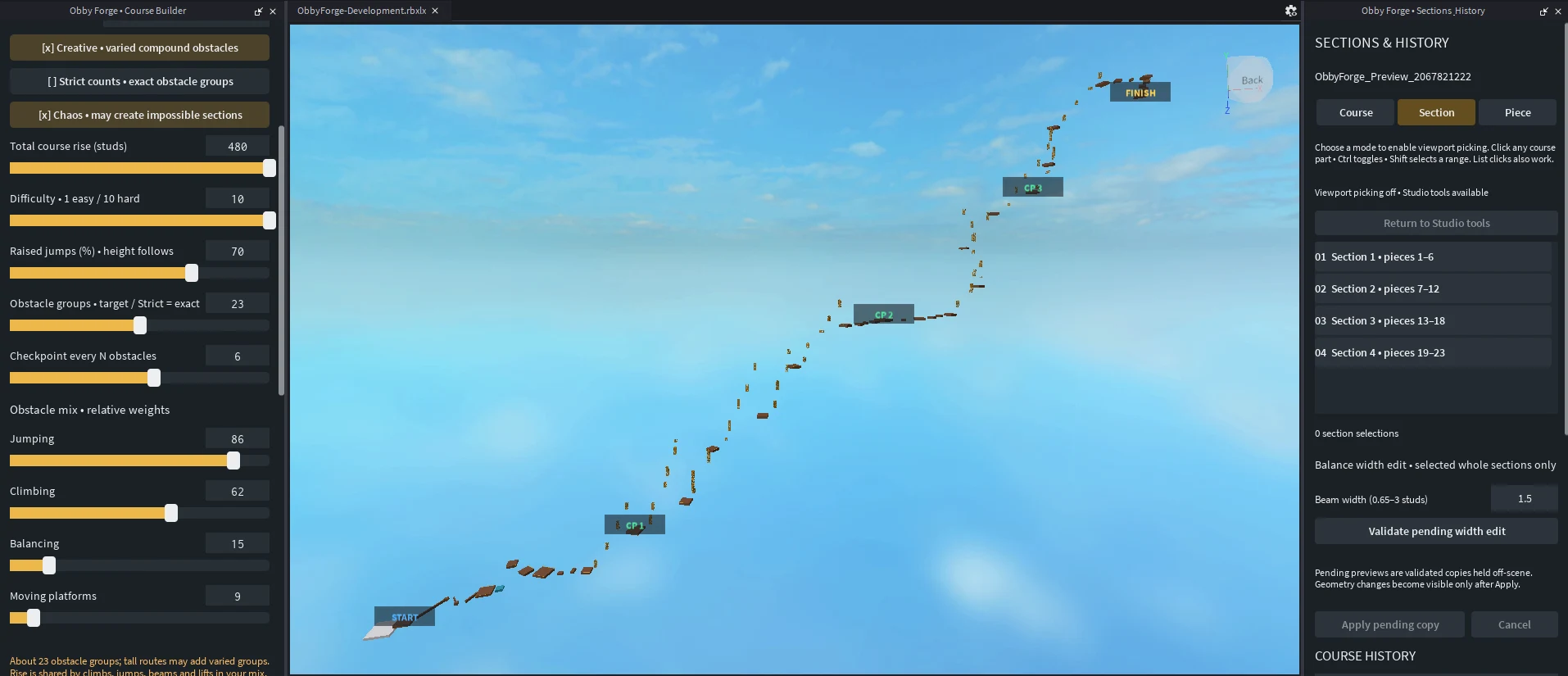
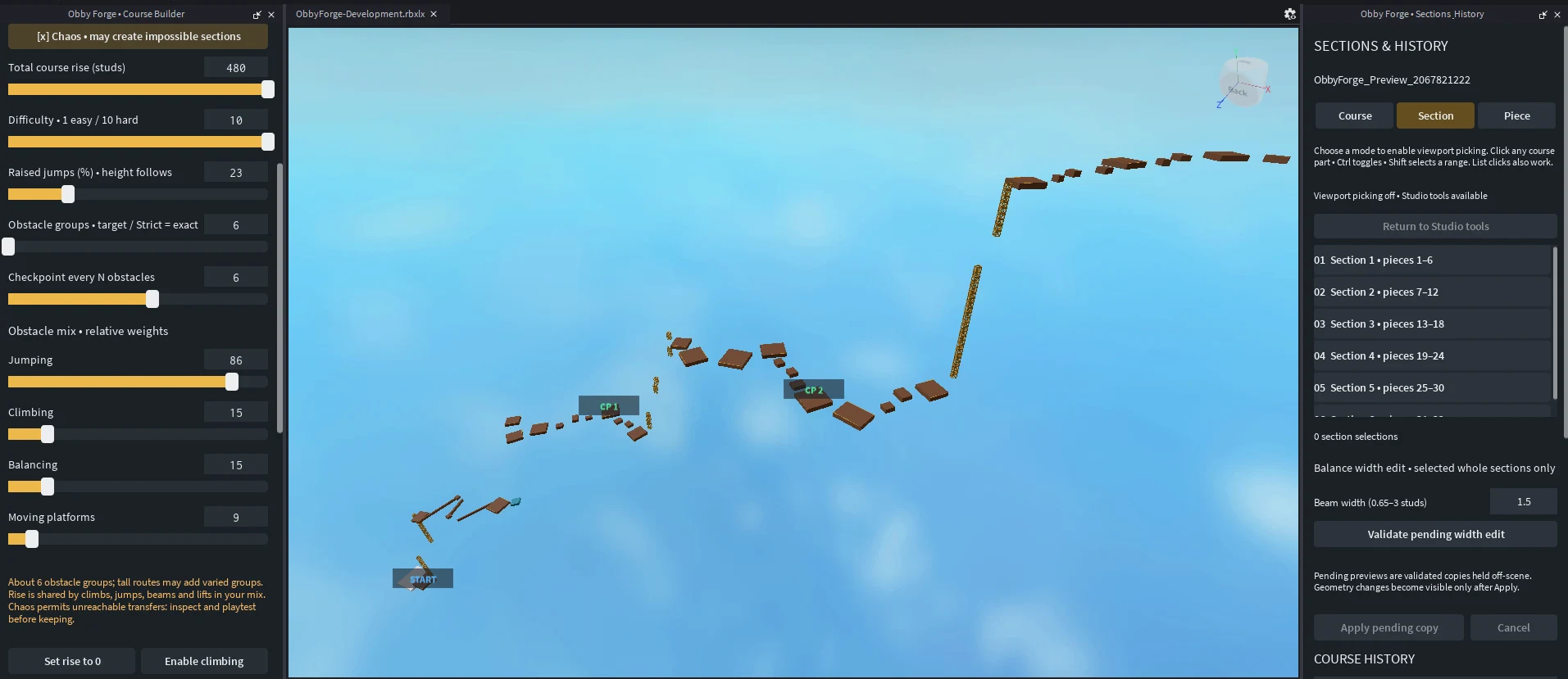
A Roblox Studio plugin for generating varied obstacle courses, then selecting, editing, and revisiting them as authored work.

A short playtest through part of a simpler generated course.

The authoring workflow

Seeded recipes control course rise, difficulty, checkpoints, and the mix of jumps, climbs, balance paths, and moving platforms. Course, section, and physical-piece selection support editing; snapshots and restoration let creators revisit earlier versions.

Checking whether a route can be finished

Validation checks estimated jump reach, standing clearance, moving-platform travel space, and potential shortcuts to help assess whether a generated route can be completed. These are partial checks: completion validation and physical difficulty calibration are still being developed, and courses need playtesting. Experimental Chaos mode deliberately permits sections beyond normal reachability estimates.

ROLE Tool direction · procedural generation and editing workflows · AI-assisted implementation · hands-on course testing and iteration.

  • Seeded generation
  • Route validation
  • Section editing
  • Version history
  • Moving platforms
07
Product judgmentTwo Studio plugins, one useful lesson

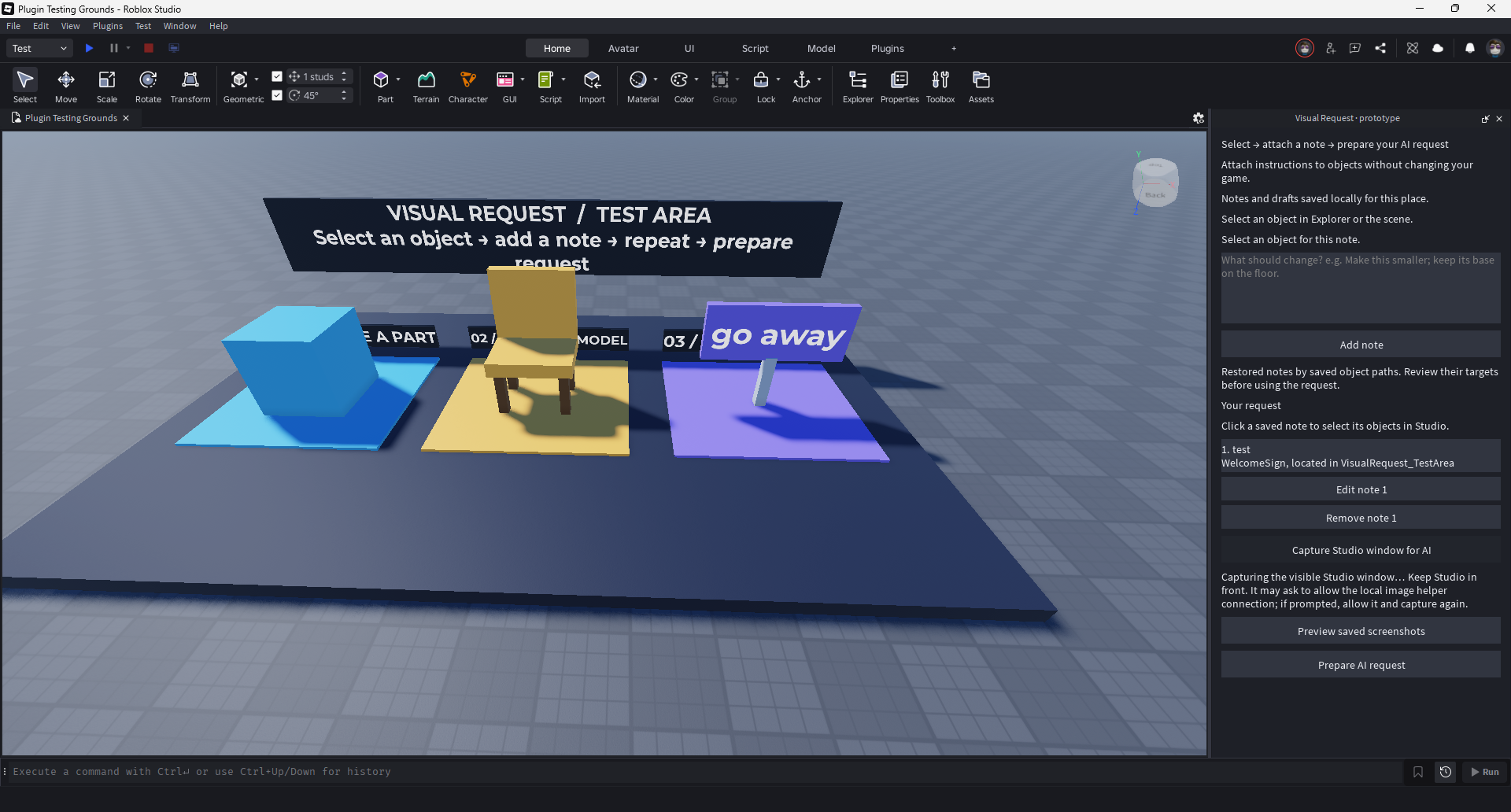
From Balance Lab to Visual Request

The first plugin tried to understand almost everything. The second solved one problem I already had every day.

Visual Request plugin open beside a Roblox Studio test area
Visual Request keeps the scene, selected objects, notes, and screenshots together.
A

Start ambitious

Balance Lab explored scanning an unfamiliar game, detecting economy rules, retaining evidence, and comparing possible changes.

!

Recognize the limit

Working on selected patterns was not the same as producing universally dependable conclusions. It remained an R&D prototype, not a finished balancing product.

B

Narrow and ship

Visual Request attaches instructions and screenshots to actual Studio objects, then exports a structured handoff for an AI collaborator. Smaller scope. Clear success condition. Published on Roblox.

View Visual Request in the Creator Store

EARLIER PORTFOLIO REEL · 5:35

The work, moving.

ROLE Product direction · systems design · playtesting · AI-assisted implementation

An earlier selection of my work. Newer projects and contributions appear above.

HOW I WORK

Generated code is a starting point, not a finish line.

I describe the intended player experience, challenge the first implementation, play the result, report what feels wrong, and keep the system moving toward something I can actually defend.

  1. 01Frame

    Define the player-facing behavior and constraints.

  2. 02Build

    Use AI to accelerate implementation and exploration.

  3. 03Break

    Playtest awkward routes, inputs, saves, and edge cases.

  4. 04Understand

    Trace failures far enough to direct the next revision.

  5. 05Verify

    Separate what was observed from what remains unproven.

THE HONEST VERSION

My Roblox work is recent. The workflow isn’t. Before Roblox and Luau, I spent years building in Unreal Engine through both C++ and Blueprints, and in Unity with C#. Before modern coding agents, the loop involved considerably more copying, pasting, testing, and stitching examples together.

“I’m a vibe coder—with professional C# history, strong product instincts, and no interest in pretending the AI wasn’t in the room.”

The value I bring is direction, taste, persistence, testing, and the ability to turn an unclear idea into a working experience. I’m prepared to discuss what I understand, what the tools produced, and what still needs verification.

ONE REAL WORKFLOW

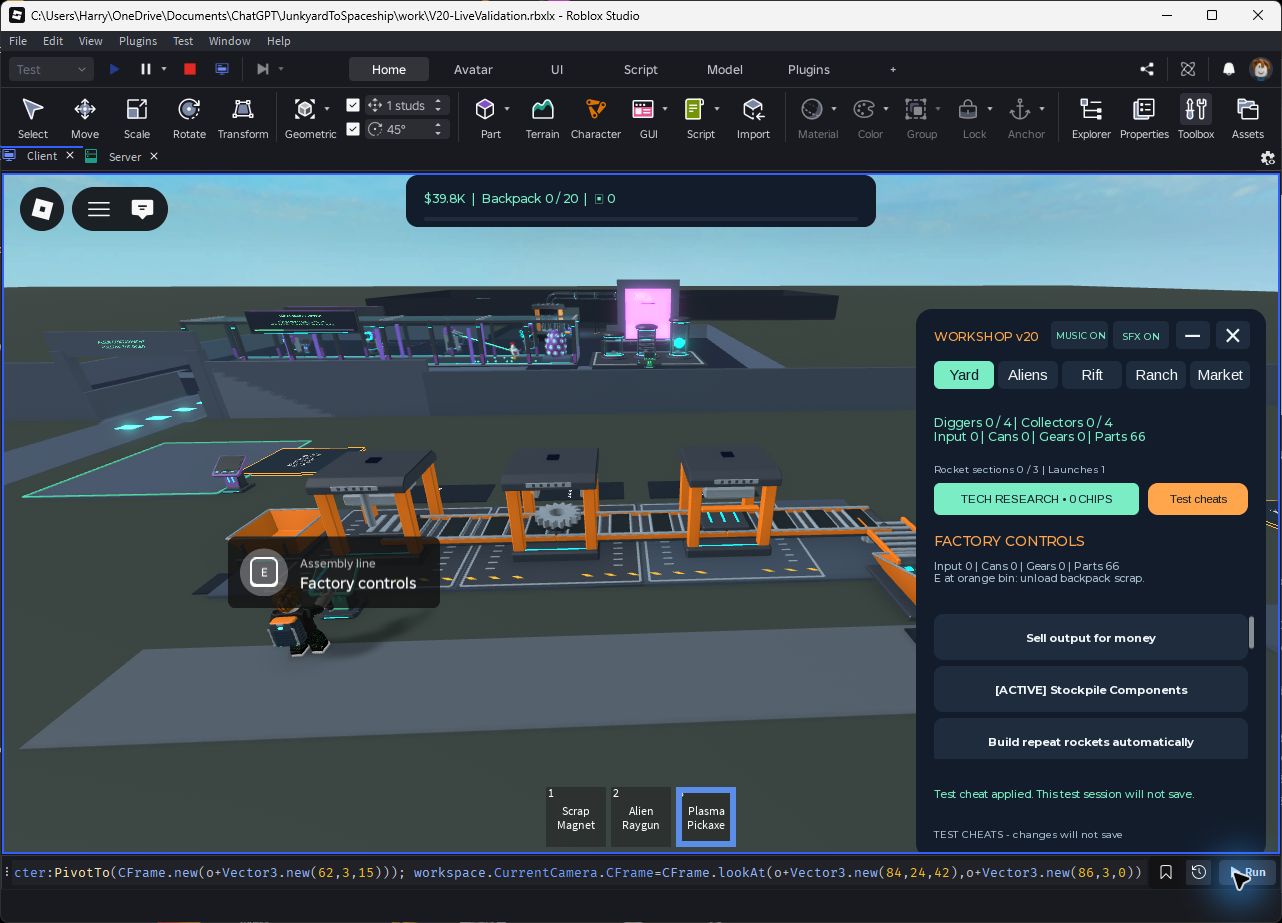
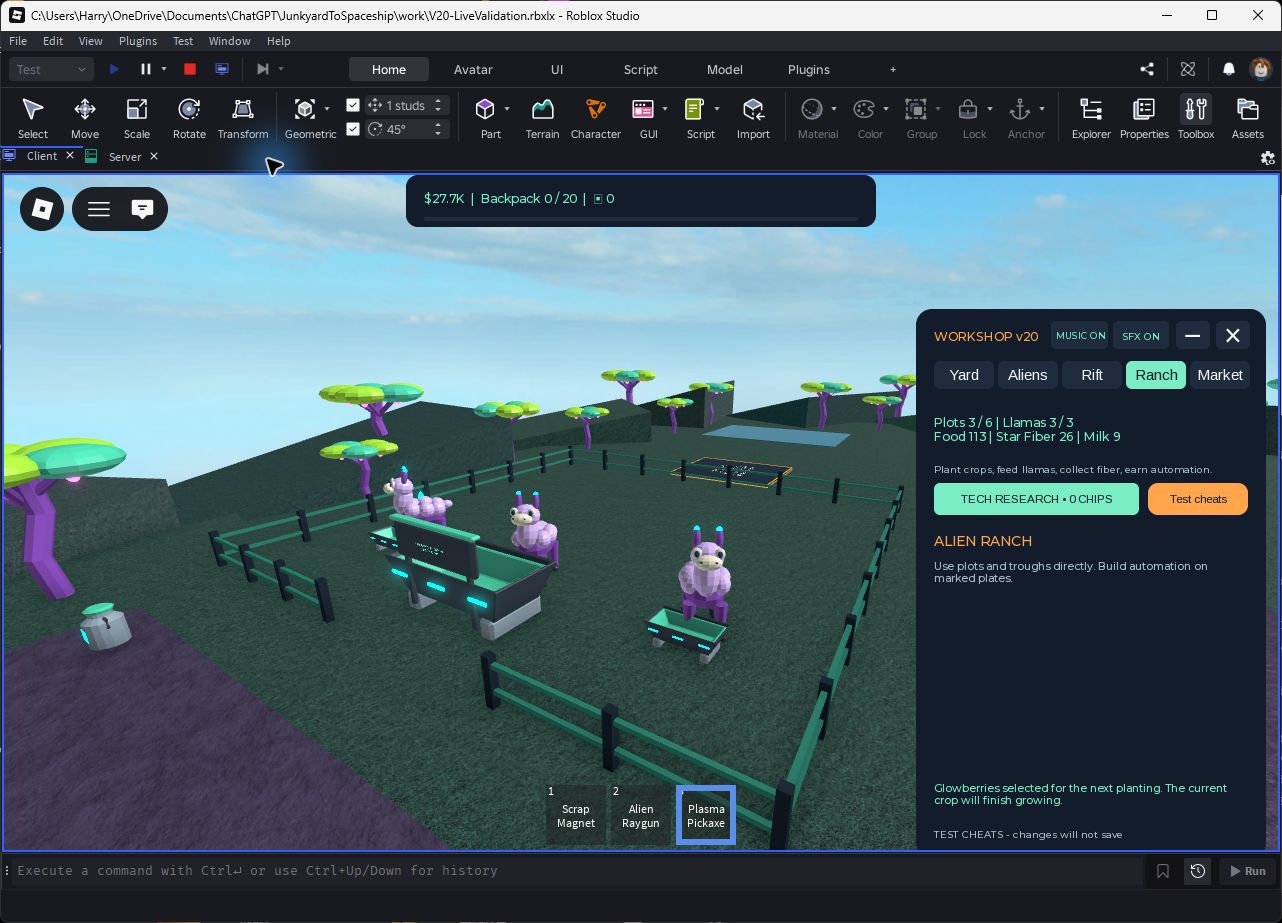
Scrap-to-rocket idea → automation-bot concepts with ChatGPT and Grok Imagine → asset creation and implementation with Astra → in-engine review → revision → integration into the larger progression loop.

LET'S BUILD SOMETHING

Looking for the strange outlier?

I’m interested in gameplay systems, production tooling, and teams willing to explore what a transparent AI-augmented developer can contribute.

Screenshot detail